First Lines Of Five Of My Favorite Books

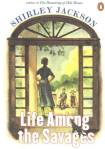


After my post last week, I still have the first lines of great novels on my mind.
Tonight, I went through two shelves of my books and took from them five of my favorite books. These are not my top five favorite books – just a sampling of books I really enjoyed and that I keep nearby. I’ve read three of them more than once and expect that I might read all of them again.
I was kind of curious to see what the first lines of these books are. So, in no particular order, here are the first lines of the five books. Let’s see if we see anything notable about any of them. I welcome your comments.
1) The Secret Life of Bees by Sue Monk Kidd
“At night I would lie in bed and watch the show, how bees squeezed through the cracks of my bedroom wall and flew circles around the room, making that propeller sound, a high-pitched zzzzzz that hummed along my skin.”
2) Embers by Sandor Marai (translation by Carol Brown Janeway)
“In the morning, the old general spent a considerable time in the wine cellars with his winegrower inspecting two casks of wine that had begun to ferment.”
3) Cloud Atlas by David Mitchell
“Thursday, 7th November –
Beyond the Indian hamlet, upon a forlorn strand, I happened on a trail of recent footprints.”
4) Life Among the Savages by Shirley Jackson
“Our house is old, and noisy, and full.”
5) Joy School by Elizabeth Berg
“The housekeeper is ironing and I am lying on the floor beside her, trying to secretly look up her dress.”
I’m beginning to think that the first line of a book doesn’t make the book memorable, but that we are drawn to the first lines of memorable books. The memorableness comes first, the attachment to the first line comes afterwards.
I know that when I finish a book I have greatly enjoyed, I immediately go to the first page and begin reading it again. I think it’s on that return to the first page that the opening of the book, and the first line, becomes striking.
Each of the opening lines above has far greater meaning to me now that I know the whole of the book, than the lines did when I first read them.
Thoughts?!
Sunday’s Snapshots
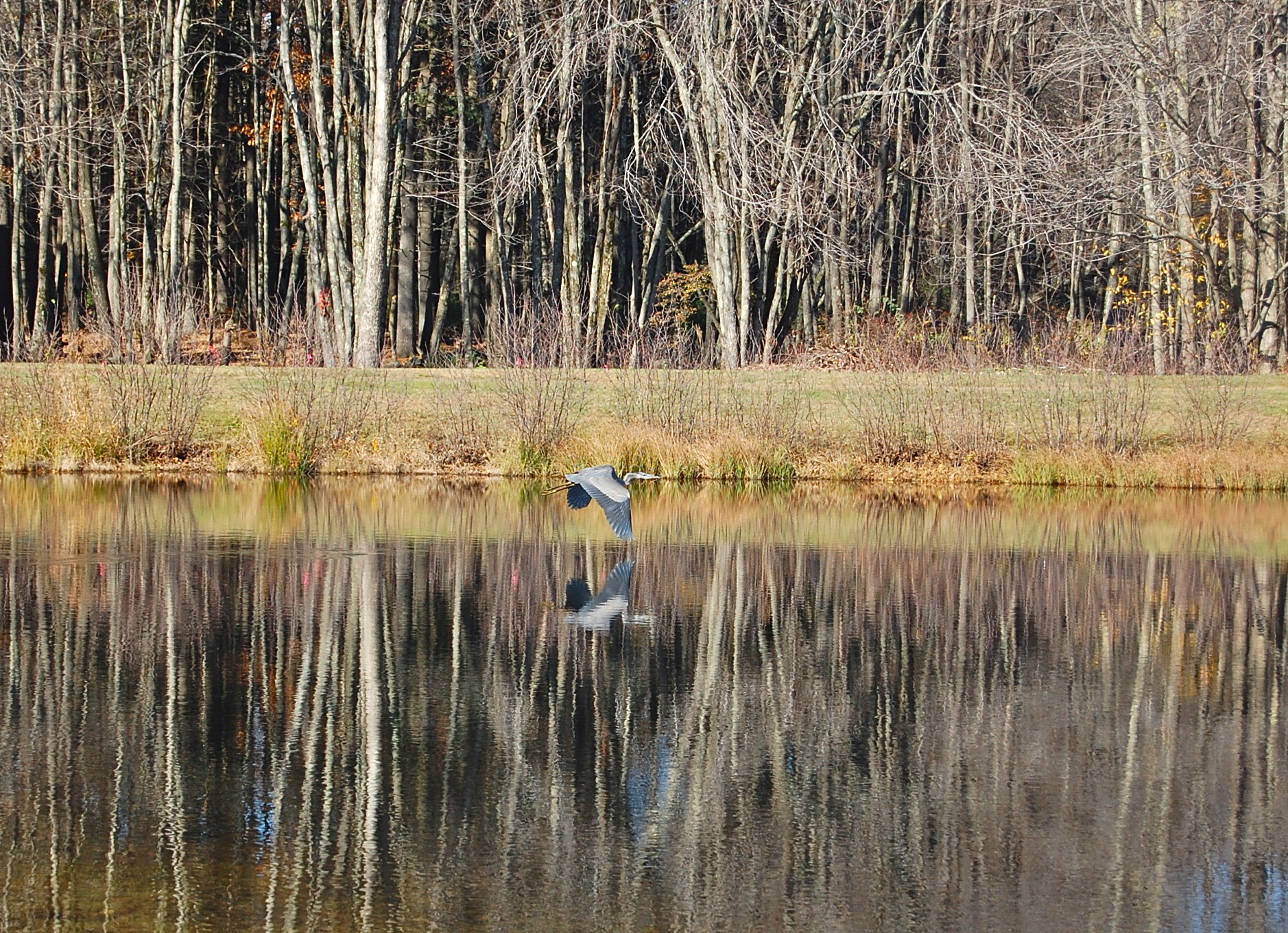 From 2007 – 2012 I kept a photo blog, SilverLining, about the four seasons of a pond in New England.
A favorite subject I wrote about frequently was the great blue heron. With a height of 3 – 4 feet and a wingspan of 6+ feet, it’s hard to imagine the bird weighs just 5 – 7 lbs. and could be both awkward and graceful in one motion, when either landing or taking flight.
For this Sunday’s Snapshot post, here are some photos I took of the heron through those years.
In 1989, when my husband and I were busy with our first child, who was then three, and expecting our second, Van Morrison released Have I Told You Lately in his Avalon Sunset album. This song played over and over in my heart for the next twenty years. It was apropos to my marriage and to my gratitude to “the One” for the blessings of my family life – imperfections and all.
This song stirs in me a compilation mood of all things both joyful and melancholy about my human existence.
If you pay attention to my Saturday’s Songs long enough, you’ll realize I came of age during a particularly vibrant time in music history. I always harken back to those influences in Saturday’s Songs.
Here’s one of the first Van Morrison songs I heard, Brown Eyed Girl, way back in the late 60s when I was in the first years of being a teenager, and a brown-eyed girl at that.
Famous First Lines of Novels On A Mug
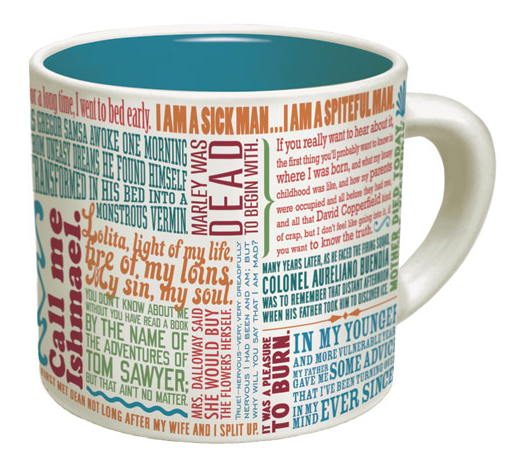
Click on the image of the mug and you’ll be taken to Bas Bleu where you can purchasing one!
I had the pleasure of giving the mug pictured above to a young friend for Christmas. I’m certain she has the interest and curiosity to appreciate the inspiration and fun of the first lines of novels printed on it.
As I wrapped this gift, I was glad to find the source of each quote identified on the bottom of the mug, since I didn’t recognize them all. I got bogged down in the study of reading the quotes, which slowed the pace of my Christmas wrapping!
This week, coincidentally, a fellow blogger here at WordPress posted about famous first lines of novels. Cristian Mahia has sparked lively participation, with readers sharing their favorite first lines of many books in the comments that follow his post.
If interested, have a look at Cristian’s post and join in the fun by sharing your most memorable first lines of your favorite writers in the comments on his page!
Turning Points In My Youthful Reading


Yesterday, I wrote about my early childhood introduction to reading, the fits and start of it. Here is the continuation of how I developed a love of reading, which led, ultimately, to my love of writing.
Though my father thought he’d hit on what would pull me into reading when he gave me Dwarf Long-Nose as a Christmas present, it was years later, when I was a teenager, that he really did hit it right when he gave me the non-fiction book, The Story of Masada by Yigael Yadin. And again, within the same timeframe, when he gave me Mia Italia by Gina Lollobrigita. Both books were not based in fiction and both were heavy with photography. My father was seeing me now as the sensitive person I was to the joys and sorrows of real life and to the human condition.
The Story of Masada is the combination story of the historical events around the siege of Masada as well as the archeological dig of that site two thousand years later. Much lighter in topic, Mia Italia is Gina Lollobrigida’s photo journal of her homeland – all her own photography. Each book, in markedly different ways, tell of real people and their love for their homeland.
As I was absorbing these examples of passionate living (and dying in the case of Masada), I was also being given fiction reading assignments with deadlines as a freshman and then as a sophomore in high school. I couldn’t put off the reading of the school assignments as I had with the fiction my father had given me when I was a child.
When I read Great Expectations by Charles Dickens my life changed. I found it nearly miraculous that an author could take me so completely into the world that he was depicting, as if I were right there with Pip, or perhaps I was Pip. It was as I read this book that I first thought of becoming a writer.
Around this time, one of my brothers suggested I read Flowers for Algernon by Daniel Keyes. I read it in an afternoon, and again, I felt as if my life were changed. The arc of this contemporary tragedy, a tragedy caused by “modern” science, posed moral and ethical questions about the use of science. The clash of the human spirit and science in this book was resounding. It resonated a long time in me.
Shirley Jackson’s short story, The Lottery, gob smacked me. How eerie my concern that it might not be suspension of disbelief that made this story believable, but the darker side of the human heart?
By the time I was a junior in high school I couldn’t wait for each semester’s syllabus of reading assignments for my English class. And I added my own reading on the side, books I found around the house. I already knew I’d major in English when I got to college.
It was thrilling for me to be introduced to the writing of F. Scott Fitzgerald, William Faulkner, Ernest Hemingway, Edgar Allen Poe, William Shakespeare, Herman Hesse and then the Russian authors, whose works were like nothing I’d read before.
My exposure in high school to Edith Hamilton’s Mythology: Timeless Tales of Gods and Heroes led the way to my combined college major, English and the Classics. I studied Greek and Roman literature and philosophy as well my English literature studies.
Truthfully, there’s not much I remember of all this in detail. And I don’t consider myself “well read.” But book reading has left me with concepts about writing and writers and philosophies and people and their times and places. I was left, too, with a sensibility about the human condition – about life and death, about our joys and sorrows, our struggles and fears, our loves.
Sometimes, I’ll reread a book from my school days, out of curiosity. I like to know if it still will have the impact it left on me then. Some do, some don’t.
As an adult, I often am reading two or three books at a time. Books I’ve enjoyed in the past couple of decades are Pride and Prejudice by Jane Austen, I Capture the Castle by Dodi Smith, A Tree Grows in Brooklyn by Betty Smith, (somehow I missed those three in my early years), Embers by Sandor Marai, Captain Corelli’s Mandolin by Louis de Bernieres, Memoirs of a Geisha by Arthur Golden, The Secret Life of Bees by Sue Monk Kidd, Joy School by Elizabeth Berg and, in non-fiction, Musicophilia by Oliver Sacks and The Tipping Point by Malcolm Gladwell. (For the record, I disliked The Help by Kathryn Stockett and Eat, Pray, Love by Elizabeth Gilbert, both hugely popular books.)
I’m sure I’ll think of lots more that I’ve read through the years, and enjoyed, that I’ll wish I had included here.
This post and yesterday’s share with you the highlights that I remember of my reading journey.
I’d love for you to share in comments the titles of books that sparked and held your love of reading.
Childhood Memories of Letting Go Into Fiction
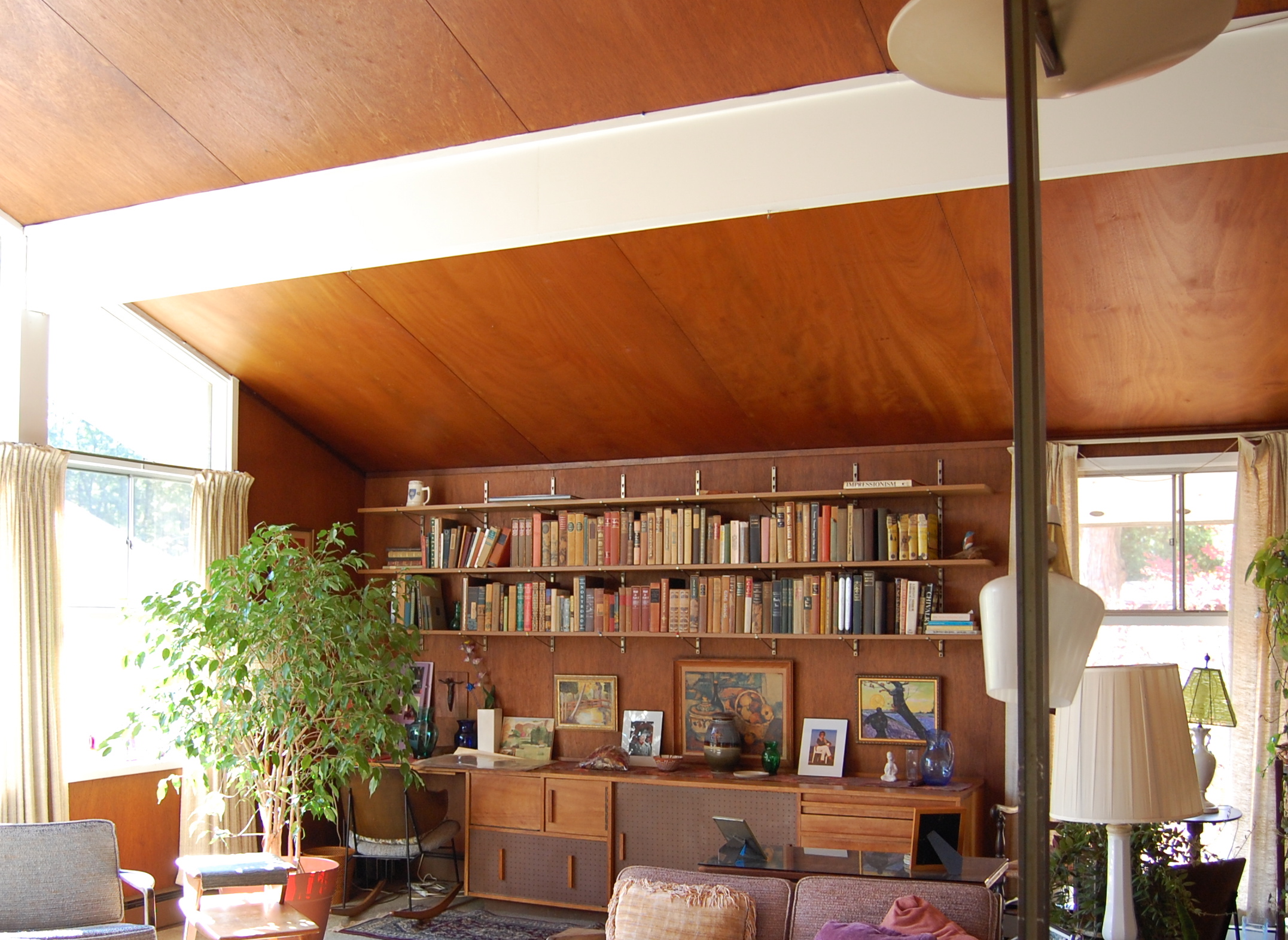 In the home of my childhood (photo above) there were hundreds of books. If I recall correctly, my sister once tried to count them and there were over 2000. While this isn’t so many when compared to a public library, it was quite a lot for a home in the 1960s-70s. I was never in another house that had a collection like the one my father amassed.
Our home didn’t have a room designated as a library. Nor were there many book cases. To shelve the books, my father vertically mounted lengths of metal strips on a wall. Fitted into the strips were arms that held planks of wood that my father had cut and painted. They were one foot deep, varied in length, and were one inch thick. You might see such shelving in a hardware store. But in our contemporary home, his book shelving worked esthetically with the geometric lines of the house (see photo above). And, in any event, once the books were on the shelves, it was to the books the eye went, not the shelving.
Our bedrooms had the same shelving. While the house was packed with books, it didn’t seem cluttered by them. And the books were arranged by topics. The corner shown below once held only books about the American Civil War.

High on a shelf in the living room was a collection of Charles Dickens’ work.
 In addition to the books, we had years’ worth of both American Heritage books and National Geographic magazine. These, if I remember right, were shelved in a stairwell. Over time, the full length of the twenty-foot hallway to the bedrooms was narrowed by about 13 inches when shelving was installed for books.
Of my five older siblings, four were avid readers. The fifth was well read, but was not a constant reader like the others. With purpose, my parents didn’t bring television into our house until I was perhaps 12 years old, and then with very limited watching allowed. So this older group of siblings grew up with books as their sole source of rainy day entertainment, warm summer afternoon escapes, and down-time brain food. They read the Hardy Boys and Nancy Drew, all Mark Twain’s fiction, and Jack London’s.
One brother had a habit of eating apple after apple as he read, tossing the cores under his bed. Another brother, at age 15, would smoke a pipe with cherry-blend tobacco as he read. My parents tolerated these eccentricities as long as they were reading.
Had I been the slightest bit a reader in my younger years, I’m sure I could list lots more of what was available on the shelves in my home. But I wasn’t yet a reader. Though not for my parents’ lack of trying.
It was my father’s habit all through the years to do his Christmas shopping for us on Christmas Eve and at one store, the local bookstore, where he’d spend hours of the afternoon before Christmas (as well as spend a small fortune) picking out and purchasing books for us.
I know he thought he’d struck it right with me the year he gave me Dwarf Long-Nose by Wilhelm Hauff, illustrations by Maurice Sendak.
 I was probably eight years old then and my father was trying to somehow get my brain to latch onto the world of imagination that I could access with books if I’d just find a way in to them.
Through the months that followed him giving me that book, he’d now and then gently ask me, “Have you finished the book yet?” He’d smile in defeat when I’d timidly reply, “Not yet.” I was his little reading misfit!
The truth was, I started the book at least three times during the next year. But I’d get to a point where it scared me and I had no desire to continue. The story actually terrified me, as did that sensation of fully entering, of falling into, the world created by an author. I was afraid that by falling into it, I’d never return home. I must have been a literal child. The book seemed all too real. I still have this unfinished book in my box of treasures from my childhood.
Heidi by Johanna Spyri was the first book I voluntarily read cover to cover, I’m sure much to my parents’ relief. I remember being anxious for much of the book. Heidi was just a tiny child (age five) and her parents had died and an aunt was now taking her to live with her not immediately pleasant grandfather, who she really didn’t know. Still,this book acclimated me to the sensation of “getting lost” in a book, while still being able to return home. That was a huge hurdle for me. But it would be some time before I hit my stride in reading.
A continuation of this tomorrow…
Sunday’s Snapshot
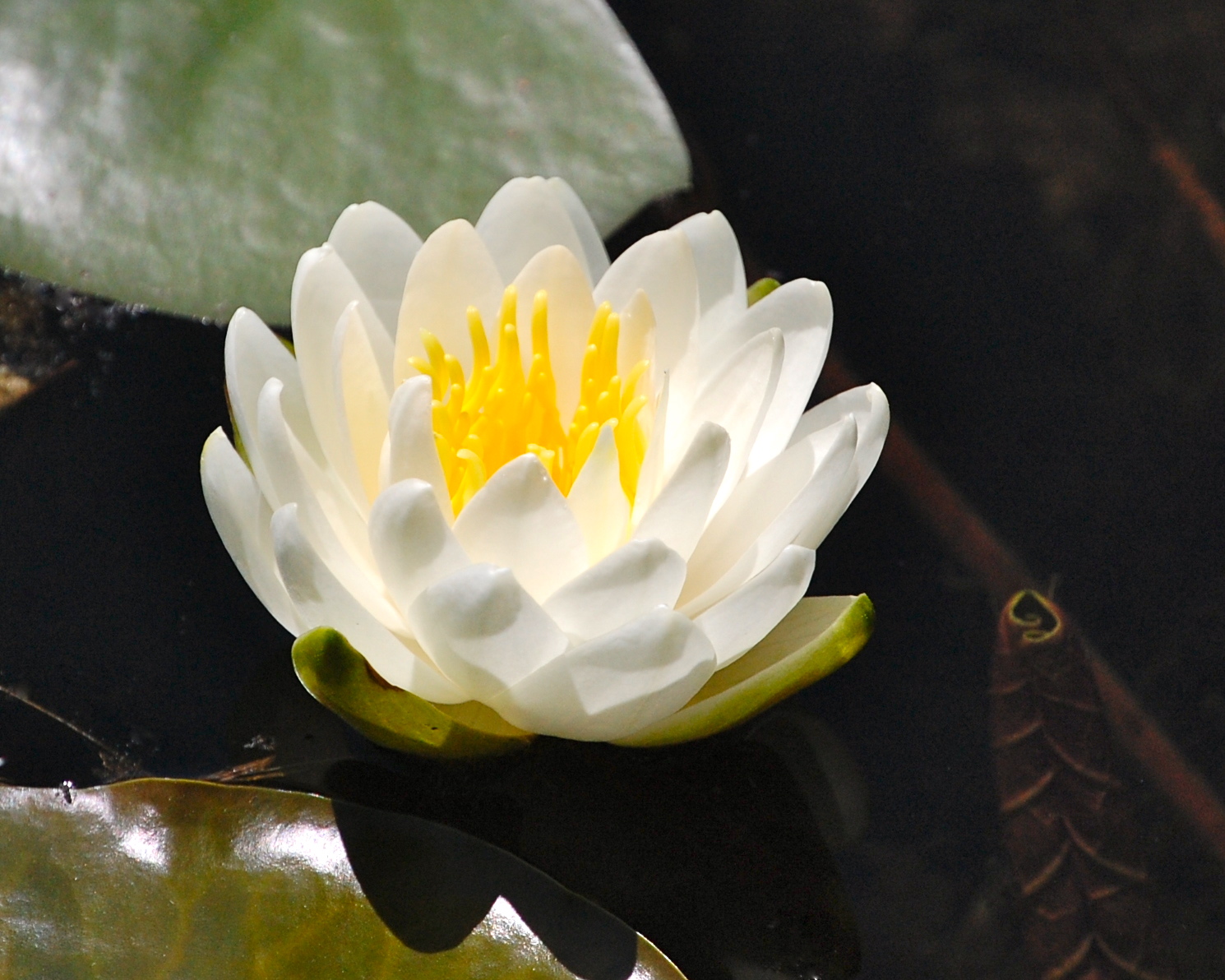
Of the thousands of photographs I’ve taken over the past several years, there are a handful that I consider my signature shots. Today, I share one with you.
For three years I tried to capture a perfect water lily blossom. You might think this would be easy, but water lilies only “glow” when the natural light is just right. And often they are covered in tiny black fleas, lots of them. Much of the day, the blossoms are closed. Sometimes one petal is “going by” while the rest are still perfect. Dragon flies love to use the pads as landing strips and the blossoms for sun bathing (which is great, if you want to get a photo of a dragon fly!). On and on, etc.
So, after three seasons of trying for what I considered a close to perfect shot, I finally captured this blossom. It still is one of my favorite photos.
The glow of the petals has nothing to do with my camera. I didn’t use a flash. That’s what water lilies do when the sunlight is just right – they bob in the water, illuminating with their own radiance. When you see it, it feels as if it’s miraculous. It was this that I had tried for three years to capture.
Enjoy.
Enjoy this Saturday’s Song, Something Stupid, which for me, like many of the songs on Michael Buble’s album, To Be Loved, is great flash-back vintage. Hearing Reese Witherspoon, who is featured on this song, makes me want to watch her again in the movie Walk The Line, where she plays June Carter and does an amazing job with her singing, not to mention her acting. And Joaquin Phoenix’s performance as Johnny Cash is unforgettable.
Recommended Reading for Writers
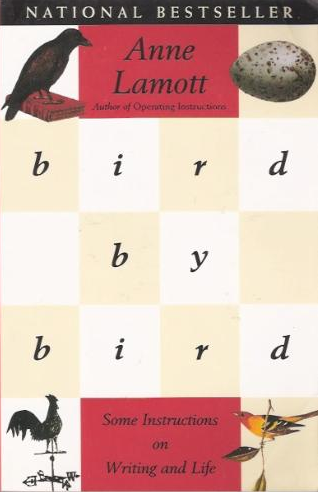
A few years ago, a dear friend gave me the book bird by bird (1995, Anchor Books) by Anne Lamott, which is a book of advice for writers.
I choose to think this gesture by my friend was a vote of confidence rather her way of saying, “You need help….!”
Either way, I found Lamott’s book to be an enjoyable and most helpful read. The beauty of this book is that it’s full of wit and wisdom that’s usable beyond your writing or even if you aren’t a writer.
I recommend it as pleasurable reading for writers and all others!
Writer’s Block – A Misnomer
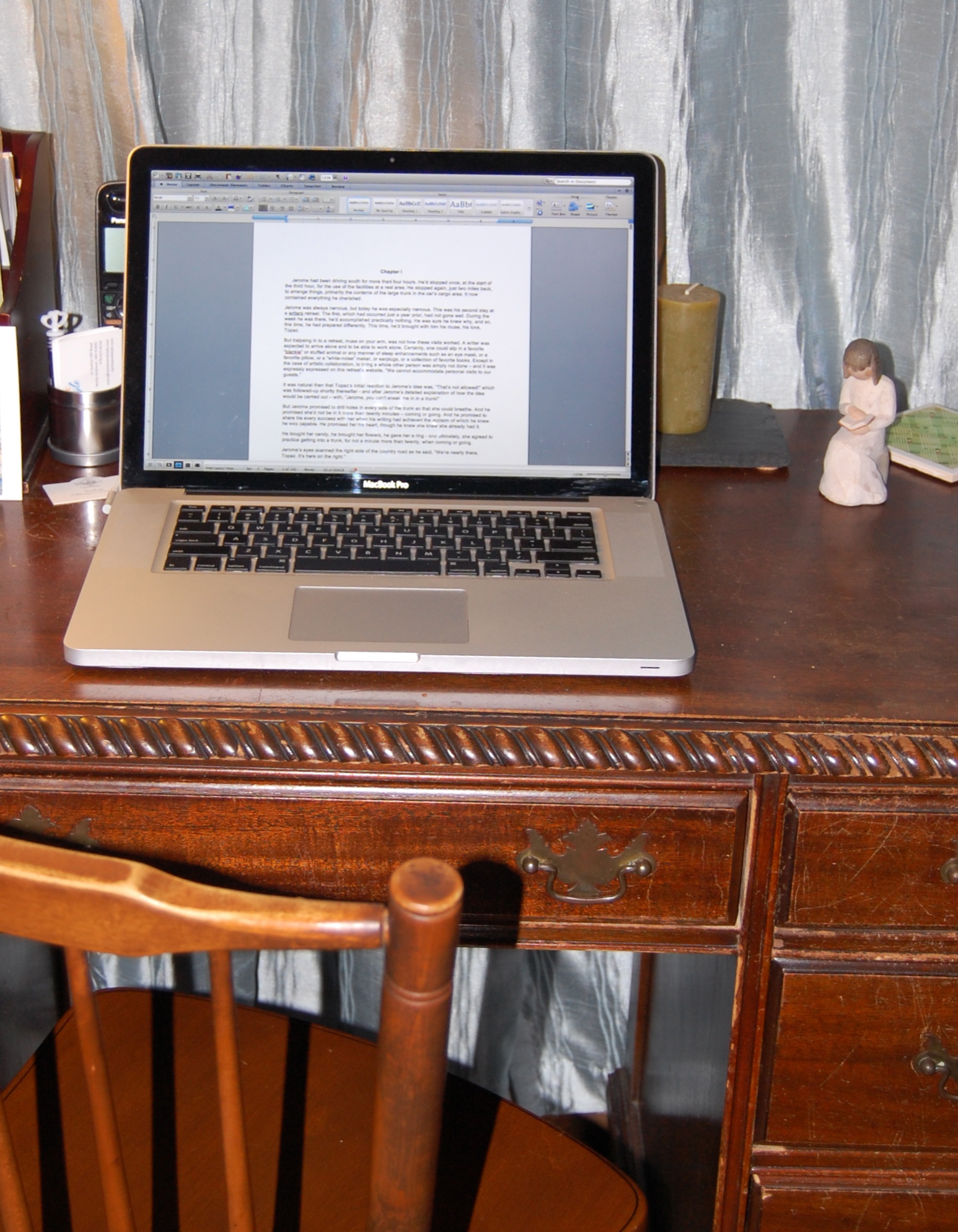 I’ve sometimes considered sharing my thoughts on “writer’s block” here at sublime days. But I suspect that everything that can be said about it has been. In the last year or two, I’ve seen posts with tips for overcoming writer’s block, as if all opinion has been exhausted and now it’s time to get on with solutions.
But after my post yesterday, I thought that maybe it’s time for me to address this topic, if only briefly.
My experience is that this thing that somehow took on the negative connotation of a “block” has become way bigger than it needs to be in the minds of writers and others.
To me, it’s a necessary stillness that a story needs for ripening, for aging, for evolving. All a writer needs to do is to keep busy till a quickening signals you that it’s ready again to grow through you.
Be alert to the signs and you’ll know when to proceed and how to proceed. And during the stillness be confident that your story is steeping into something more bold than anything you can force out of yourself.
While you wait, hone your writing skills through forms of writing that you don’t typically use. Exercise your writing by write longer (or shorter) sentences than you normally write. This waiting time is also a good time to work on your marketing. It’s also a good time to expose yourself to other forms of art. As I wrote yesterday, visual art inspires my writing process.
Also, do housework or yard work. I’ve had the continuation of a story strike when I least expect it and as I was doing a menial task – as if by distracting my mind with minutia, the creative energy was freed to continue.
Just don’t wander too far from pencil, paper or computer.
Most of all, be open to any thoughts that come to you about the story you are waiting on. Snippets of creativity will drift along before you – when you’re awake and when you’re asleep. Be alert to them, dwell on them, jot them down. Soon enough you will again have hold of the reins and you’ll be off on another wild ride of writing.
The key is to trust the stillness, which means trusting yourself, the writer.



 sublime days